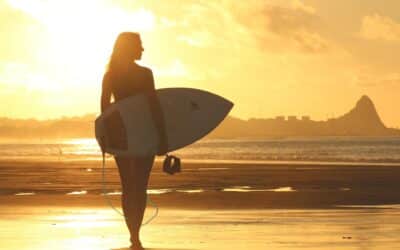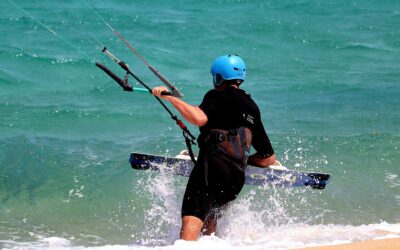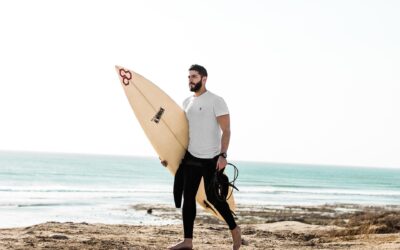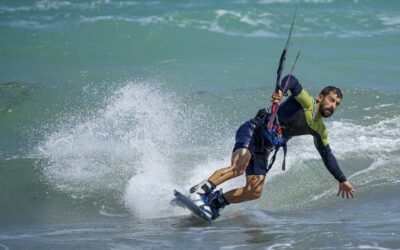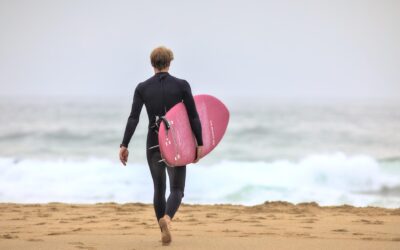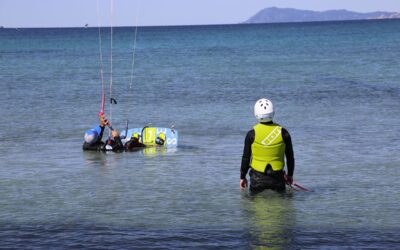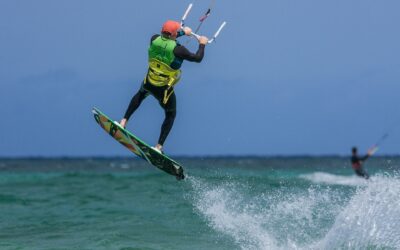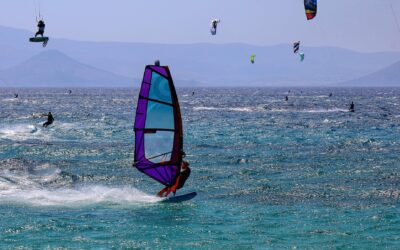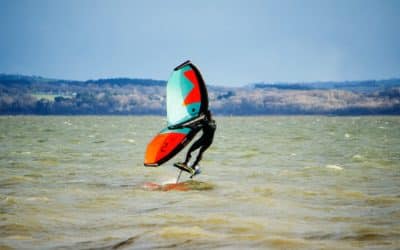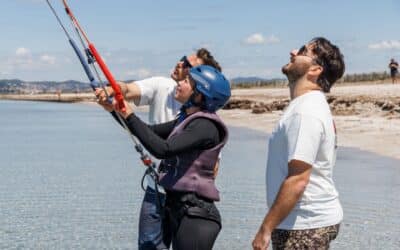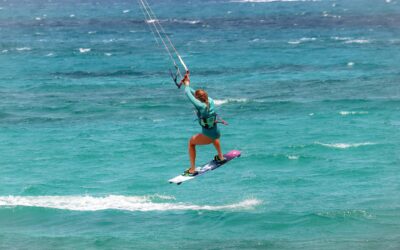
Imagine Greg, standing on his directional board without a single strap, gliding across the Almanarre bay as the morning wavers between a light breeze and a sudden burst of mistral. Beside him, Colin, his fellow instructor at the KGG kitesurfing school in Hyères, offers advice in a calm yet firm voice: “In strapless kitesurfing, your feet obey only you… so, enjoy it! Strapless is that exhilarating mix of pure freedom and feline agility. The promise of learning the surfkite letting your toes savor every millimeter of wax, ready to rewrite the laws of fun on the Mediterranean.
What is strapless kitesurfing?
Le strapless kitesurfing, with a mythology all its own, it is somewhat the art of strapping into your board while simultaneously snubbing it. No strapless to keep your foot in place or provide reassurance during those inevitable falls: here, only your balance, your technique, and a dash of boldness serve as your safety belt in this discipline.
This practice involves using a directional board specially designed, often inspired by surfing, allowing the rider to feel a maximum of the thrill of riding. An insight into why so many riders are now moving away from straps, dreaming of progression without any restrictions or neoprene chafing around the ankles.
Why choose a directional board?
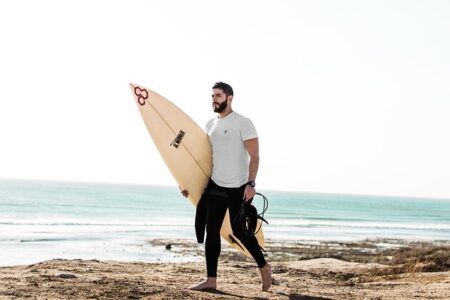
The benefits are numerous: increased maneuverability, effortless wave riding, and above all, the opportunity to switch between contemplative cruising and acrobatic tricks worthy of videos from tutorials on social media. The lack of a physical connection between foot and board provides a massive dose of freedom : here, there is no relying on gear alone. Only training, patience, and good strapless surf lessons in Hyères serve as a winning combination.
- The thrill of the ride multiplied
- Versatility on various water conditions
- Effortless movement of body positioning and edge control
- Total freedom for your feet, fostering creativity
Learning and Progression: How to Get Started Without Losing Your Head (or Your Board)
The idea of surfing without the comfort of a strapless awakens a sense of vertigo in some. Yet, learn kitesurfing strapless is nothing like Russian roulette if you follow the right steps. At the school KGG, Greg and Colin are dedicated to demystifying those first difficult efforts, turning stress into smiles during your very first sessions on directional.
À Hyères, the ideal conditions of the Almanarre bay are in total agreement: water as flat as a billiard table at sunrise, followed by playful chop as the wind picks up. Instructors always recommend starting at a safe spot, far from crowds and obstacles, to calmly master these new the thrill of gliding.
What are the advantages of strapless lessons in Hyères?
Going it alone is tempting… until the moment your board heads toward Spain before you’ve even finished your third boat drop-off. There is nothing quite like private lessons or in a small group to progress quickly, following the well-established credo of Greg and Colin: “Good instruction is worth a thousand falls.”
Thanks to their tailored tutorials, they break down every essential movement: handling the surfkite, controlling foot placement without the temptation to pull on an imaginary strap, and kite management during each crucial moment of maneuver. You transform chaos into a refined choreography… sometimes even an elegant one.
What are the key stages to progressing in strapless?
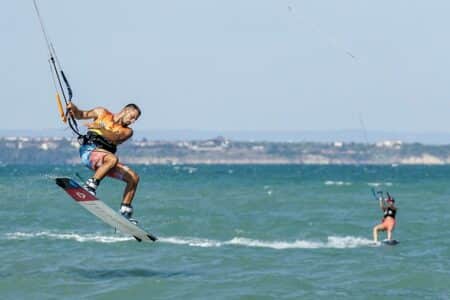
Every session brings its share of triumphs and wipeouts: a kite launch that is far too abrupt, a tack a missed catch, or even that board that slips away from you only to come back with the help of a laughing instructor. Not a disaster: in strapless kitesurfing, falling is never a punishment. It is simply the mischievous punctuation in a sentence of progress.
- Give it a try various sizes of boards
- Mastering the’balance and reading the water conditions
- Reproduce the maneuvers by watching the pros or through video tutorials
- Analyze every mistake with humor (and perseverance)
Gear and Equipment: How to Choose the Right Setup?
As soon as it comes to gear selection, while others spend more time comparing shapes and volumes of directional boards than just checking the weather forecast. On the side equipment, the goal is not to mimic the typical Hawaiian pro’s gear, but rather to select exactly what is needed for Mediterranean conditions: a suitable wetsuit, a heavy-duty leash, plenty of wax—and, of course, a well-chosen board (and a helmet if confidence hasn’t yet caught up with experience).
At KGG, opinions are divided regarding the best shape or optimal setup. Greg prefers stability, while Colin favors a more reactive feel for enhanced maneuverability. Both agree on one thing: it is better to test several models during a camp so you can truly feel what works for you. It is universal advice, applicable to both the beginner and the weekend warrior alike.
| Element | Beginner | Intermediate | Advanced |
|---|---|---|---|
| Directional board | Wide, stable, high volume | Average size, more responsive | Short shape, for technical maneuvers |
| Kite | Easy to relaunch, forgiving of mistakes | Versatile | Fast, precise, small surface area |
Iconic Maneuvers: From Sensational Jibing to Heroic Duck Tacks
Nothing boosts a rider’s ego quite like the successful completion of an actual jibe on a wave. The jibe is that magical pirouette of the strapless kitesurfing : carving through the crest of a breaking wave while carving the board like a principal dancer—all without losing control of your trajectory, lest you end up inventing a brand-new form of artistic diving.
Le boat drop-off and the tack are also must-haves. Each maneuver reveals the level of fluidity achieved: feet dance and find their place effortlessly as the board caresses, cuts through, and then insolently brushes against the swell. Those looking to impress will dare to duck tack, the ultimate challenge where you must agilely pass the kite downwind with one hand while changing direction at full speed. It is a true ballet, one that makes Colin laugh and commands Greg’s admiration, even after all these years on the water.
- Classic jibe : clean carving and precise relaunch
- Boat drop-off : quick transitions and controlled kite handling
- Duck dive : boldness and agility required, guaranteed thrills
Frequently Asked Questions about strapless kitesurfing
Is it better to start strapless kitesurfing on a specific board?
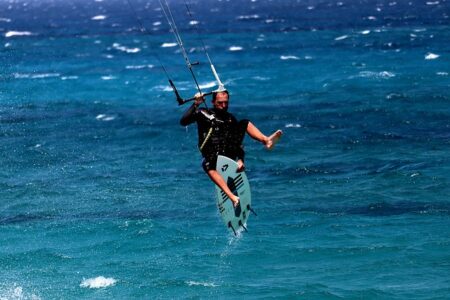
- Plenty of volume for stability
- Rounded shape to tolerate errors
- Robust construction to withstand impacts
Does it take a long time to master major strapless maneuvers?
Every student progresses at their own pace, but with a dedicated lessons and detailed explanations, most quickly master the basics of jibe and the boat drop-off. The first few weeks are all about developing your instincts and balance ; then, repetition perfects the execution. The key? Perseverance, listening, and a passion for experimentation.
- Basic jibe : mastered after just a few sessions for any motivated beginner
- Tack et duck tack : require more technique and regular practice
What advice would you give to avoid losing your board when starting out with strapless?
To minimize the constant back-and-forth between swimming and chasing, a suitable leash can secure your directional board during your first sessions. You will also learn how to manage the kite control when a crash is imminent, and prioritize an open spot to avoid interfering with others. Finally, always follow the safety instructions provided by your instructor.
- Always use a durable leash
- Training at open water zone
- Anticipating your trajectory during crashes
Is strapless kitesurfing suitable for children or only for experienced adults?
This practice requires coordination, balance and water autonomy—qualities typically seen in young athletes from their late teens onwards. For motivated children who are already familiar with the traditional kitesurfing, the personalized coaching offered during camps allows them to gently explore the unique sensations of strapless riding.
- Recommended age: 13-14 years and up, under supervision
- A pace tailored to your first sessions
- Enhanced safety and fun-filled learning