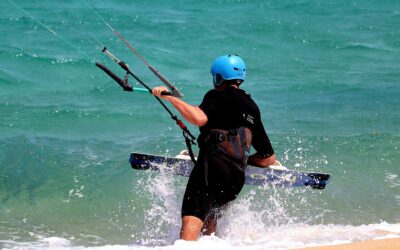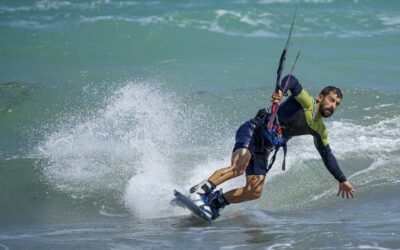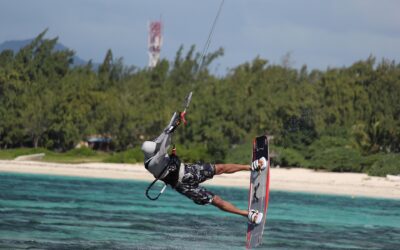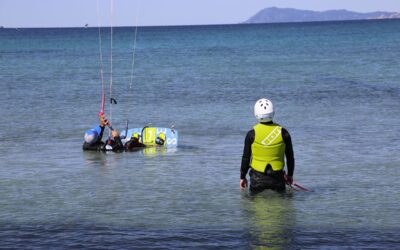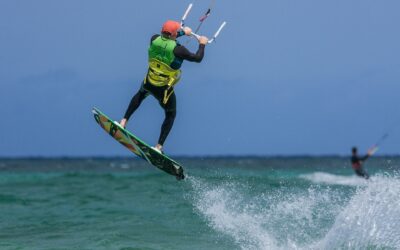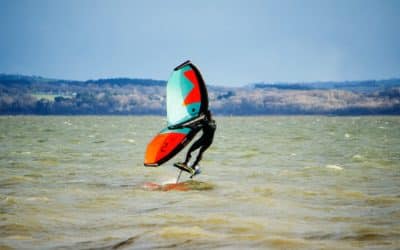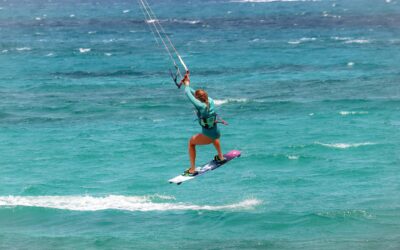
Did you think a quick glance at a board would make you the Messi of kitesurfing? Don’t make me laugh! Greg and Colin—instructors at KGG in Hyères, as sun-bronzed as Greek statues—will tell you straight: choosing the right kiteboard size, it’s like picking a partner for a wild slow dance. Too big, and it takes control of the floor; too small, and you end up trampling your dreams… or your toes. Either way, it usually ends in the foam, somewhere between a mischievous wind and the waves of the Almanarre bay.
How to choose the right kiteboard size?

Greg often sums it up like this: “Choosing a board is like ordering a pizza: size matters, but so do the ingredients.” So, we are talking about board length, of board width and of course kitesurfer’s build. The goal? To find the perfect balance to achieve the maneuverability and the stability tailored to your preferred riding style.
Key criteria to consider
Colin, never one to skimp on advice, always reminds everyone of these essential points before heading out to tackle the spot:
- Your weight and height (the smart kitesurfer’s winning combo)
- Rider level (beginner, intermediate, advanced… or a self-proclaimed kamikaze)
- Wind conditions of the day or the season
- Riding Style dominant (relaxed freeride, energetic surfkite, playful twintip, or futuristic foil)
- 追求卓越性能: reactive maneuverability or reassuring stability
The goal is simple: to align all of this data with the recommended dimensions based on weight and height. Like a sharp-eyed head coach, the goal is to assemble the best possible team.
Why Length and Width Make All the Difference ?
Let’s look at two extremes. A longboard (more than 140 cm) is very forgiving of weak legs and the hesitation typical of those first upwind legs: ideal for anyone looking to get started without ending up face-down in the sand. Conversely, a shortboard (50 to 52 in) attracts bold riders dreaming of twintip tricks and tight, high-speed slalom turns.
On the side of board width, the larger it is, the more float it provides: perfect for heavier riders or light wind days. On the other hand, a narrow board puts everything on speed and precision. But be careful—there is no room for error: the consequences can be harsh, especially in the Mediterranean!
Recommended dimensions based on weight, height, and style: how to choose the right setup?
At KGG in Hyères, the choice of the ideal dimension is taken as seriously as a secret family recipe. Greg and Colin observe, discuss, and measure, before delivering their verdict like Olympic judges—though always with a sense of humor.
A friendly reminder: don’t try to mimic your neighbor’s kiteboard size without a second thought. Jaqueline, weighing 50 kg and soaking wet, doesn’t need the same gear as Hugo, who is 95 kg (beer included). Different setups for different riders—everyone finds their own joy!
Summary Table of Recommended TwinTip Sizes
Here is a table to help ensure every session stays controlled and avoids turning into an uncontrolled aquatic stunt show:
| Rider weight | Board length (cm) | Width (cm) |
|---|---|---|
| Under 60 kg | 130-135 | 38-41 |
| 61-75 kg | 135-140 | 39-42 |
| 76-90 kg | 140-145 | 40-45 |
| Over 90 kg | 145+ | 43+ |
This chart can never replace the intuition of a seasoned instructor, but it does capture spectacular crashes and other impromptu plunges in the Hyères bay.
The importance of adapting to wind conditions
In the Almanarre bay, the wind changes its mind faster than your dessert cravings. As a result: you have to adapt the size of the kitesurf board to every mood of Aeolus. In light winds, bring out the XXL board, like a joyful ocean liner; when the Mistral roars, switch to something shorter to maintain control and that sporty feel.
When starting out in water sports, it is common to look for recommendations regarding essential gear; for instance, knowing which type of essential gear for getting started with wingfoil can help explain why board dimensions also play a crucial role in rapid kitesurfing progression. With experience, some riders develop an animal instinct, becoming capable of choosing the best board dimension just by scanning the foam. The others? They’re keeping their cards close to their chests, and that’s perfectly fine!
Choosing the Right Kiteboard Size for Your Skill Level and Riding Style

Beginners, aim for ease with a wide and long board to smooth out mistakes and prolong the fun. Intermediate riders opt for a slightly more responsive board, striking a balance between reassuring stability and that first taste of agility. Experts, on the other hand, fine-tune their choice: short twintip for freestyle, expanded strapless board for kitesurfing, or extended foil to soar above the rest.
Trends by discipline
Every discipline has its secrets. For the freeride, a versatile mid-length board (135-140 cm) makes it easy to handle and ensures comfortable sessions, even when the Mediterranean gets rough. In surfkite or strapless, we prioritize a design inspired by classic surfing, featuring increased volume in the front to float on the wave’s face.
In mode foil, making way for science fiction: thin boards, sometimes short, where the lift from the foil makes volume almost irrelevant. The moral of the story? Ask Greg or Colin for advice to avoid forced landings on your very first glide!
Common mistakes to avoid when choosing the right size
Some think they can defy the laws of physics with a board that is too stylish or too compact for their skill level. Bad idea: you’re looking at struggling waterstarts, cramped legs, and guaranteed underwater selfies. Instead, bet on the stability focus on the basics first; finesse will follow!
Another pitfall: neglecting the board width. It significantly influences how the board reacts to edging, upwind riding, and carving. Neglecting width is like cooking a Mediterranean dish without olive oil: the magic simply vanishes!
Frequently Asked Questions About Kiteboard Size
What board size is recommended for kitesurfing beginners?

- Effortless Departure
- Reducing falls
- Superior stability for discovering different riding styles
When should you change your kiteboard size as you progress?
Once the basics have been mastered and course control is well under command, it becomes worthwhile to opt for a shorter and more dynamic board (129-135 cm). This change depends on your comfort level on the water and your desire for new sensations, ranging from freestyle to surfkite.
- Stable riding across all speeds
- Smooth takeoff
- Looking to master turns or tricks?
Does board width affect maneuverability?
Yes, the board width plays a key role in the maneuverability and stability. On a larger scale, it makes starting and gliding easier in light winds, but will be less precise during turns. Experienced riders often prefer a narrower board to gain more responsiveness.
- Large = stability, buoyancy
- Narrow = dynamic, better performance in high winds
| Riding | Typical width |
|---|---|
| Freeride | 39-42 cm |
| Freestyle | 38-41 cm |
| Surfkite | Up to 45 cm |
Should you adjust the size based on wind conditions?
Absolutely: the wind conditions dictate the choice. In light winds, a larger board provides more surface area and makes riding easier. When the wind picks up, a smaller board provides control and safety.
- Wide/long board = light wind
- Short/narrow board = strong wind
Be sure to check out a instructor before making a radical change in board size depending on local weather conditions.