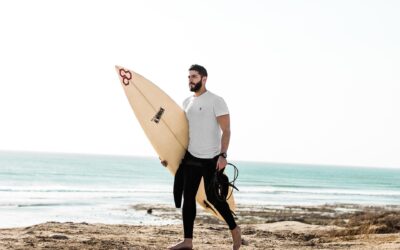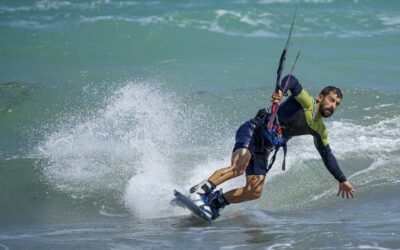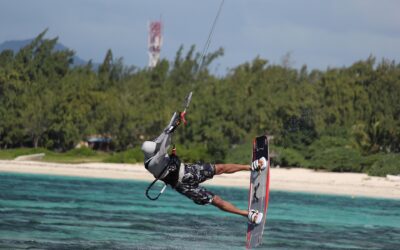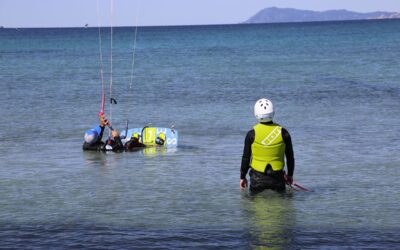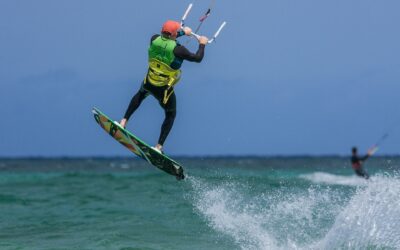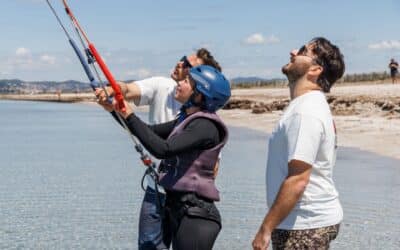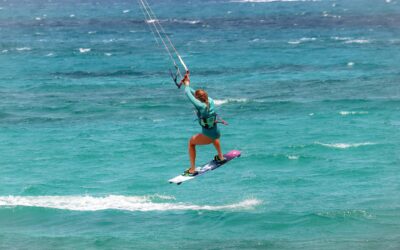
Imagine Greg, the kind of guy who can explain wind physics while waxing his board, sharing a knowing glance with Colin. On the beach in Hyères, facing the Almanarre bay, they see this sprightly kitesurfer approaching, red shorts, a bright smile… but no head protection. The next scene writes itself: an overly ambitious jump, a sudden gust, and—presto—your forehead says hello to the edge of your board. Yes, we’ve seen more glorious arrivals on the Côte d’Azur. That is exactly why, at KGG today, Greg and Colin won’t let you off the hook until you have mastered your kitesurfing helmet stubbornly set in his ways.
Why should you wear a kitesurfing helmet?

There is a common misconception that the sea is less dangerous than the mountains. Yet, a poorly handled bar or a collision with another rider can instantly turn any smile into a grimace. The kitesurf helmet has become the ultimate insurance for your skull: protecting against unexpected impacts, the force of a taut line, or those sessions that take a turn for the worse during an unforgettable wipeout.
What dangers lurk for kitesurfers’ heads?
In terms of statistics, it is a real standout: between untamed boards, sharp foil, and festive slides over the pebbles of Var; each session offers enough pitfalls to fill two seasons of “ER.” Not to mention that marvel of typical Almanarre winds, which can turn a sail—and incidentally its pilot—faster than Greg can grab his towel.
A top five of the most common minor injuries? **Impacts from hard landings**, collisions with other riders, foil strikes, snapping cables, or… plunging into sneaky rocks hidden by the swell. It is nothing glamorous, but all of this is part of the joyful experience at our spots.
The helmet: a modern shield for the liquid era
You might feel like a superhero when the wind picks up, but no one is invincible. A kitesurfing helmet provides protection where even sunscreen fails: at the temples, forehead, and occipital region. Not only does it preserve brain integrity during movements that resemble artistic acrobatics, but it also limits the impact of common yet painful accidents.
And in this ocean of foam and adrenaline, where every session promises a new personal best (or, failing that, a great story to tell), it is best to rely on the safety without losing the sense of adventure.
How to choose your kitesurfing helmet?
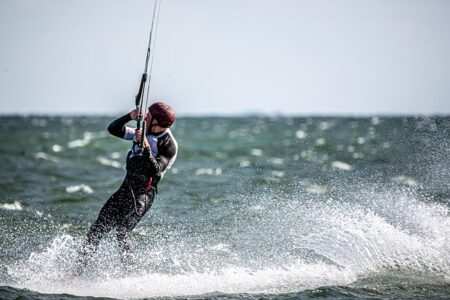
To help you identify the essential gear needed for your sessions, check out this the ultimate guide to choosing your kitesurfing gear which specifically details the selection criteria for helmets, as well as other essential gear such as impact vests and how to choose a helmet based on your head shape.
When it comes to gear, forget about sandbox-quality plastic. Today, among the specialized brands, you will also find hulls in polypropylene ou ABS, foam-padded EVA. Designed to absorb impacts and contour the shape of your head—even after a melted cheese pizza.
Comfort and Fit: Essential for a Great Ride
Even Colin, who has no patience for unnecessary gear, will admit it: you can’t go far if your helmet is pinching like an oyster or shifting all over the place at the first sign of chop. A good kitesurfing helmet is forgotten once you’re riding; it fits perfectly around the head, thanks to a precise tuning, ensuring there is absolutely no friction. We take the time to test the chin strap, adjustable as it should be, and that’s that.
When it comes to comfort, beware of questionable marketing. Instead, look for:
- From soft interior pads, thick, preventing chafing as early as the third wave.
- A efficient ventilation, essential during summer sessions at l’Almanarre.
- Un featherweight. Because lightness is far from a luxury: it’s much better to avoid that heavy, straining sensation on the back of your neck after three hours on the water.
Safety standards: take it seriously (even if it’s rare)
It may not be the most fun chapter, but Greg insists: never without a helmet tailored certification for the water sports. To ensure your investment is protected, look for markings indicating compliance with recognized standards. The goal remains simple: to absorb as much energy as possible upon impact so you can spend more time having fun and less time in the infirmary.
Most of the high-performance helmets consist of several layers: rigid outer shell, absorbent EVA foam interior, side reinforcements, and a precision tightening system. In practice, none of these features are superfluous.
The unexpected benefits of a kitesurfing helmet
Do you think the benefits end at the head protection? Error. Ask a rider who caught a seagull to the temple mid-downwind run. Or ask a freestyle fan who was rescued after taking an uppercut from the board: the helmet protects, certainly, but it provides insulation from the cold and acts as a shock absorber for acoustic shocks and even serves as a stylish mount for an action camera.
Every kitesurfer has their own story. Whether it is a visor that blocks the glare of the Mediterranean sun or a windbreaker protecting against the icy spring spray in Hyères, a helmet deserves to be seen in a new light—not merely as a mandatory accessory, but as a faithful ally in preserving pure enjoyment.
Greg and Colin’s Tips for Helmet Care
A quick checklist to keep your gear in top shape for seasons to come—an instructor’s little secret:
- Rinse it thoroughly with fresh water after every session to wash away salt and sand.
- Let it dry in the shade, away from the intense UV rays of the Var.
- Avoid falls on hard ground outside the water: a helmet absorbs impact… up to a certain point.
- Look for signs of wear, especially on the inside. A deformed foam, it is a reduced absorption.
Greg sometimes adds his own special touch: a lucky sticker or a homemade sweatband. Personalization is where on-water performance begins.
When to replace your kitesurfing helmet?
Like any good piece of armor, a helmet has its own lifespan: a few hard crashes, plenty of sun exposure, and occasionally being left in Colin’s sweltering car… eventually, it reaches the end of its road. You must remain vigilant. If the helmet sustains a major impact (even if invisible), or if the materials are cracked or too soft, they’re headed straight to the recycling bin! The safety, it’s constantly evolving.
A few warning signs:
- Fails to hold firmly despite adjustments.
- Compressed inner foam or breakthrough.
- Cracked outer shell, even superficially.
Investing in a new model, tailored to your body type and certified for the water sports becomes not only wise… but truly lifesaving.
Across the Bay: The KGG Mindset
Here, at KGG in Hyères, south zone of l’Almanarre, we ride hard, but above all, we look out for one another. You don’t need to be a world champion to understand that the safety also serves to go further and faster, without the fear of ending your week in the local hospital.
Greg often speaks of “joyful confidence.” It is this very mindset that drives students to progress quickly, dare to attempt that dream backloop, and choose their gear with high standards (helmet included), and returning to savor the Var breeze day after day. By making the kitesurf helmet As essential as sunscreen, the KGG team cultivates boldness… in a protected version.
Frequently Asked Questions About Kitesurfing Helmets
What features should you look for in a kitesurfing helmet?

- Un precise adjustment system for maintenance.
- From ventilated pads for added comfort.
- A enough lightness to forget about wearing a helmet while riding.
Always opt for certified models according to the water sports standards.
Is wearing a kitesurfing helmet mandatory?
The port of helmet is not systematically required by French regulations, but it is strongly recommended by all reputable schools, including KGG in Hyères. Faced with the unpredictability of water sports, a helmet becomes essential to protect the head, prevent serious injuries, and provide peace of mind for families… and instructors.
How long does a kitesurfing helmet remain reliable?
Generally, a well-maintained helmet remains effective for 3 to 5 years of regular use, but it must be replaced after a major impact or as soon as signs of wear appear (cracks, collapsed foam).
- Check regularly the hull and padding.
- Replace it as soon as the essential components show signs of wear.
Can you use a bike or skate helmet for kitesurfing?
It is strongly advised against using a helmet not designed for water sports. These models do not offer the same resistance to moisture, nor the same capacity for buoyancy or resistance to salt corrosion. Only the specially designed helmets ensure comfort, lightness, and true safety at sea.